Saturday, 7 february 2026
As a shopaholic my relationship with “stuff” is… complicated. I love a new dress or bag more than I should, but also wrestle with the very real problem of overconsumption and exactly what kind of psychology lies at the heart of the compulsion. So when I started to read about circular fashion recently, I decided to take a closer look.
The promise is appealing: buy the nice things, use and enjoy them, then when you no longer want or need them, organise for them to either be recycled, repaired, repurposed, or resold. No waste. No guilt. Just a perfectly chic loop of environmentally friendly sustainability.
But does it actually work? Or is it just a clever marketing ploy to rebrand overconsumption and make us feel better about continuing to buy all the stuff?
Once upon a time clothes were designed to last, repaired when broken, and passed down to family and friends. You only bought what you needed, and often not even as soon as you needed it. Then came the dawn of the fast fashion era: mountains of cheap, mass produced items that threw seasons and quality right out the window, ushering in the instant gratification of the buy-use-dispose mentality. We now find ourselves living in a disposable culture, where millions of tonnes of textiles are sent to landfills every year.
Why we love Circular fashion (a.k.a. The Dream)
- Less waste: this is the big one. If clothes are re-used or recycled, it reduces the landfill burden as well as the demand for new raw materials, and eventually the demand for fast fashion is, in theory at least, reduced.
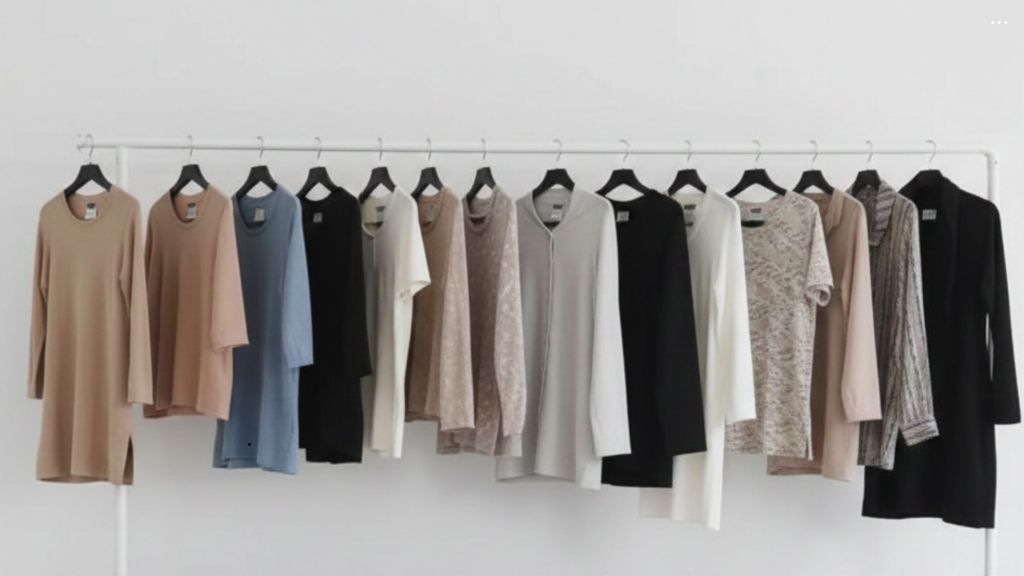
- Longer hanger life. Get more wear and greater value out of quality pieces, which may or may not go on to a second life. Think intentional, quality pieces you will want to wear for years to come, taking the “disposal” piece of the equation out altogether.
- Conscious consumption encourages us to think about longevity rather than fleeting trends. Choosing to invest in timeless quality knowing it has a future beyond my closet feels good, and also respects the time, craftsmanship, and resources that went into producing them.
- Community: resale platforms, rental services, and clothing repair shops help to foster a sense of shared resources and creativity.
The Elephant in the Closet (A.K.A. The Reality Check)
Here’s where my inner cynic kicks in. Just like that complete checkout button can promise more than it delivers, circular fashion in and of itself isn’t a magic fix.
- Overconsumption, rebranded? This is the thing: does the concept of circular fashion just give us a feelgood pass to buy more? If I know that I can resell that designer dress, am I more likely to buy it, even if I only wear it once? Once again I’m expanding my closet to include more stuff, not less.
- The illusion of recycling: turns out that true textile recycling is still incredibly difficult and expensive, especially for mixed fibers. Many “recycled” items are actually downcycled into rags or insulation, or simply exported, thereby making it someone else’s problem down the line.
- Cost versus access: high quality, repairable, sustainable fashion is often marketed as such and therefore often more expensive, meaning that not everyone has access to easy resale or rental services.
- Hidden energy costs: every time a garment is shipped, cleaned, repaired, or processed for recycling, it uses energy and resources. That circle doesn’t come for free.
so Is It Worth It?
Like most things, there’s no simple yes or no.
Circular fashion can be worthwhile if it genuinely encourages us to buy less, choose better, and wear things for longer. It’s not just about the clothes going around in a loop; it’s more about our mindset, and breaking free of the thinking that it’s normal to buy so many things in the first place.
For me, it boils down to two things: am I trying really hard to justify a new purchase; and am I chasing a trend/being influenced? When I manage to get to the root of those questions I’m better able to avoid buying things I really don’t need.
After all, while buying a well made preloved bag or vintage coat is preferable to buying brand new, the very fact that you’re reusing something can make it far too easy to end up buying more.
Ultimately, the most circular and environmentally friendly thing we can do is to buy nothing at all unless it’s truly needed. But if we absolutely must buy it, choosing more thoughtfully is a step in the right direction.
 The Sojourner Diaries
Leave a comment