Sunday, 12 April 2026.
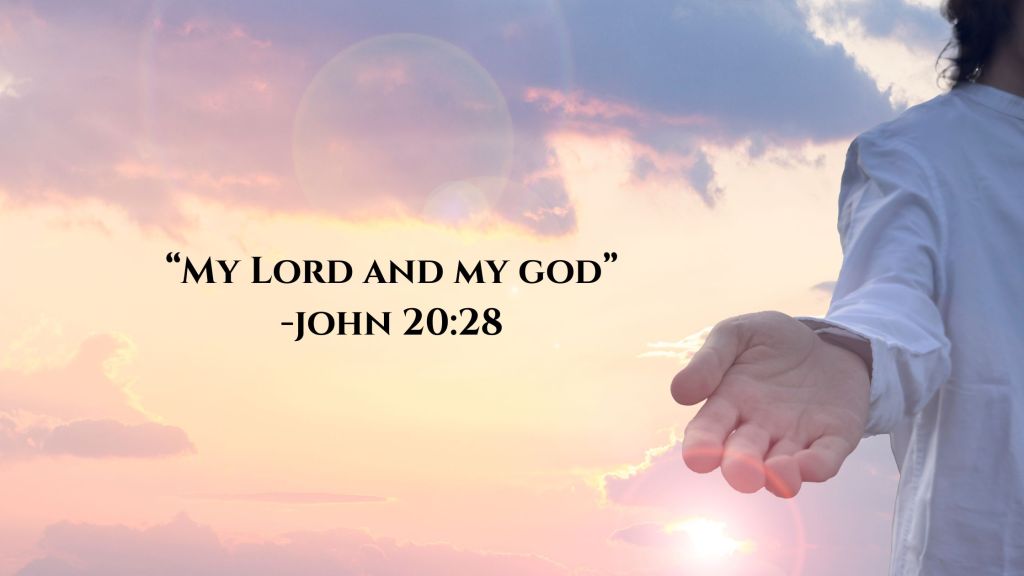
Today marks Divine Mercy Sunday, and the Gospel brings us one of the most relatable figures in the entire new testament: Thomas. (Often labeled “doubting Thomas,” which I’ve always felt is a bit unfair). Thomas is one of my favourite people in the Gospels. He’s the one who voices exactly what we’re all thinking when things feel too good to be true.
Thomas wasn’t there the first time Jesus appeared to the disciples. When they told him the news, he didn’t just nod and smile. He wanted proof. He wanted to touch the wounds. He wanted to see for himself. And in our world of AI, deep fakes, curated perfection, and endless digital noise, Thomas’s skepticism feels incredibly familiar. We’re literally taught to question and verify everything. We’re told repeatedly that seeing is believing. And so, when we hear a message of hope or a promise of mercy, our first instinct is often to look for the catch.
Jesus’s response to Thomas is a gentle pivot: “Blessed are those who have not seen and have believed.” This resonates far beyond the walls of a church. Think about the things that actually make life worth living: love, courage, peace, the feeling of home. You can’t put any of those things under a microscope. Believing without seeing is really just deep trust. It’s trusting that the sun will rise even during the longest night, or that a quiet Lent will eventually lead to a blooming Easter. It’s leaning into the invisible foundations of our lives.
The beauty of Divine Mercy Sunday is that Jesus didn’t scold Thomas for his doubts. He didn’t lock the door. He came right to where Thomas was standing and offered him exactly what he needed. And that is what Mercy looks like. It isn’t a reward for having perfect, unwavering faith; it’s a gift for those of us who are still figuring it out. It’s for the people who feel “not religious enough,” the people who have questions, and the people who are currently standing in the empty tomb of their own lives.
Thomas was honest about what he needed to believe. And in response, he received a peace that surpassed his understanding. This week, let’s look for the invisible graces. Let’s trust the quiet nudges of our hearts more than the loud shouts of our screens. Mercy is available to everyone, especially to those of us who are still asking, “Is this for real?”
 The Sojourner Diaries
Leave a comment